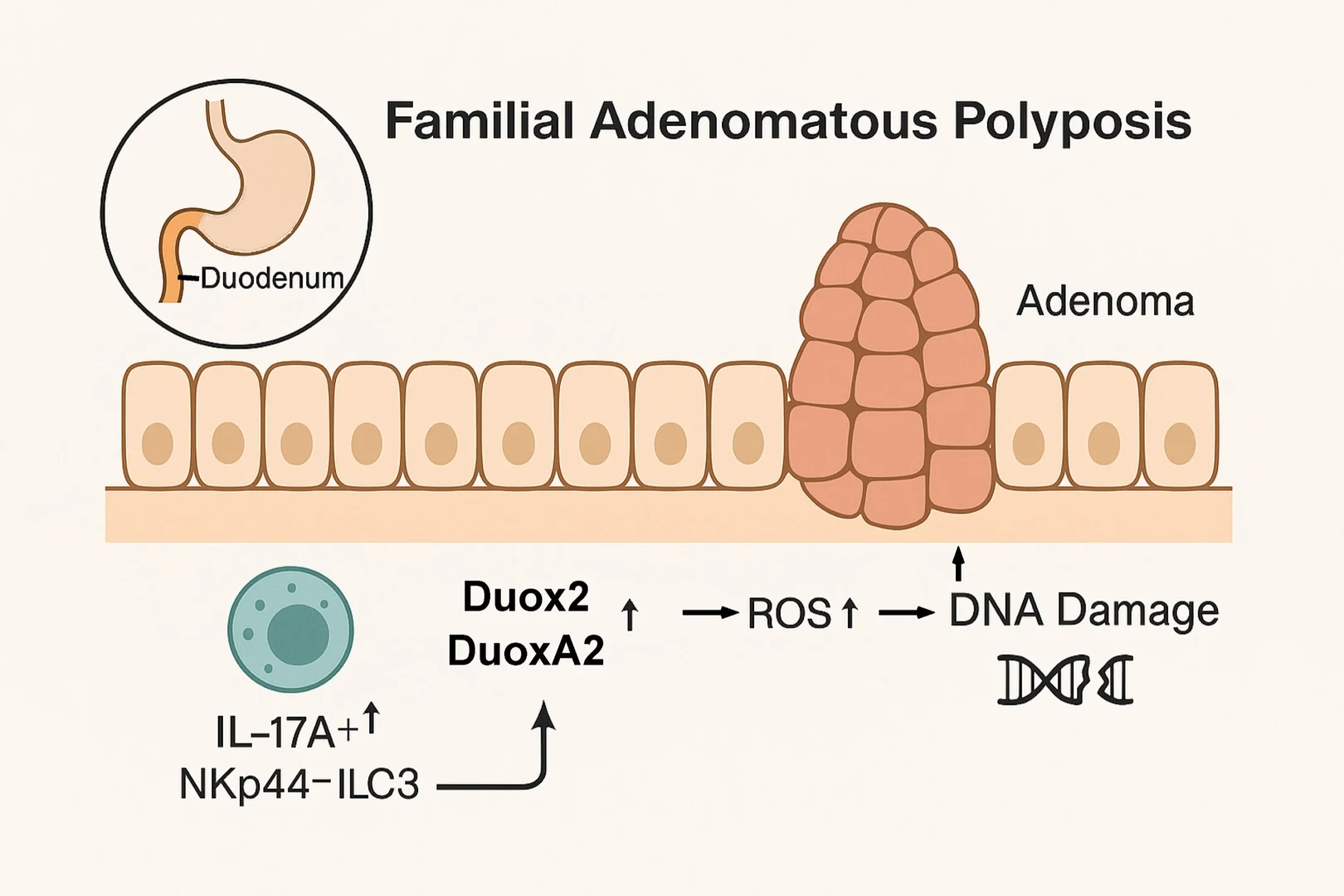
Familial adenomatous polyposis (FAP) is a hereditary disease which, in addition to a high risk of bowel cancer, also a greatly increased risk of duodenal cancer. At present, the only treatment available is close endoscopic monitoring with removal of the precursors, known as polyps, although this is also associated with an increased risk. "But there are no specific preventive therapies," says co-lead author Dr. Benjamin Krämer, Scientific Head of the Laboratory for Congenital Cellular Immunology at the UKB. "Since the severity of the disease varies greatly even among carriers of the same gene mutation, the search is on for other factors that influence the development of the disease - and the local immune system is becoming the focus of attention." [...]
Participating Core Facilities: The authors acknowledge the support from the Flow Cytometry and Bioinformatics Core Facility.
Participating institutions and funding:
These results are based on a collaboration between research institutions from all over Germany. The study was conducted under the leadership of researchers from Medical Clinic I at the University Hospital Bonn (UKB), with the ImmunoSensation² Cluster of Excellence at the University of Bonn also playing a key role. Also involved were the German Center for Neurodegenerative Diseases (DZNE) in Bonn, the German Rheumatism Research Center (DRFZ), which is affiliated with the Charité University Hospital in Berlin and cooperated as part of the DFG Priority Program SPP 1937 "Innate Lymphoid Cells", and the Ludwig-Maximilians-Universität (LMU) Munich, which participated in the context of the German Center for Infection Research (DZIF).