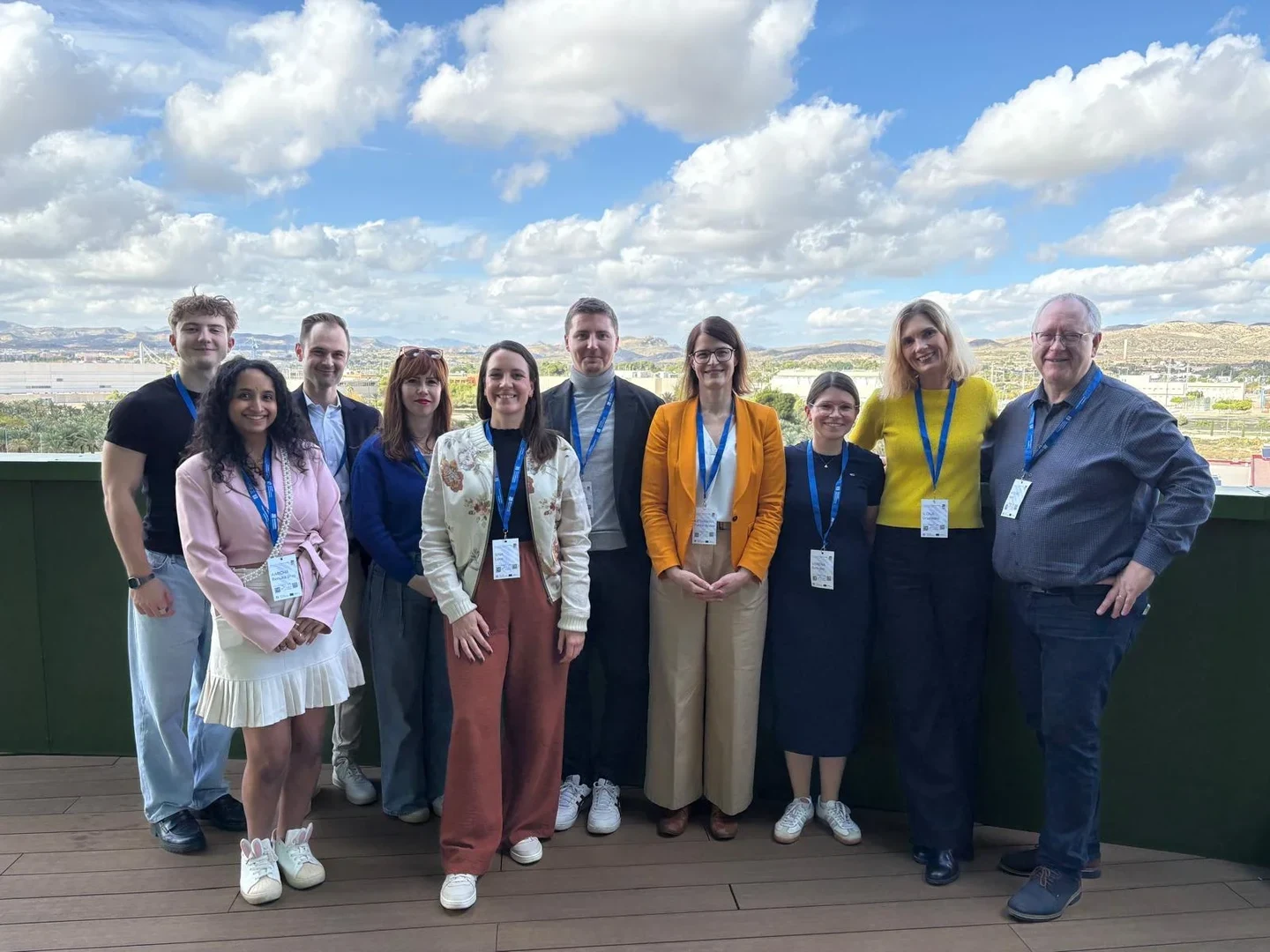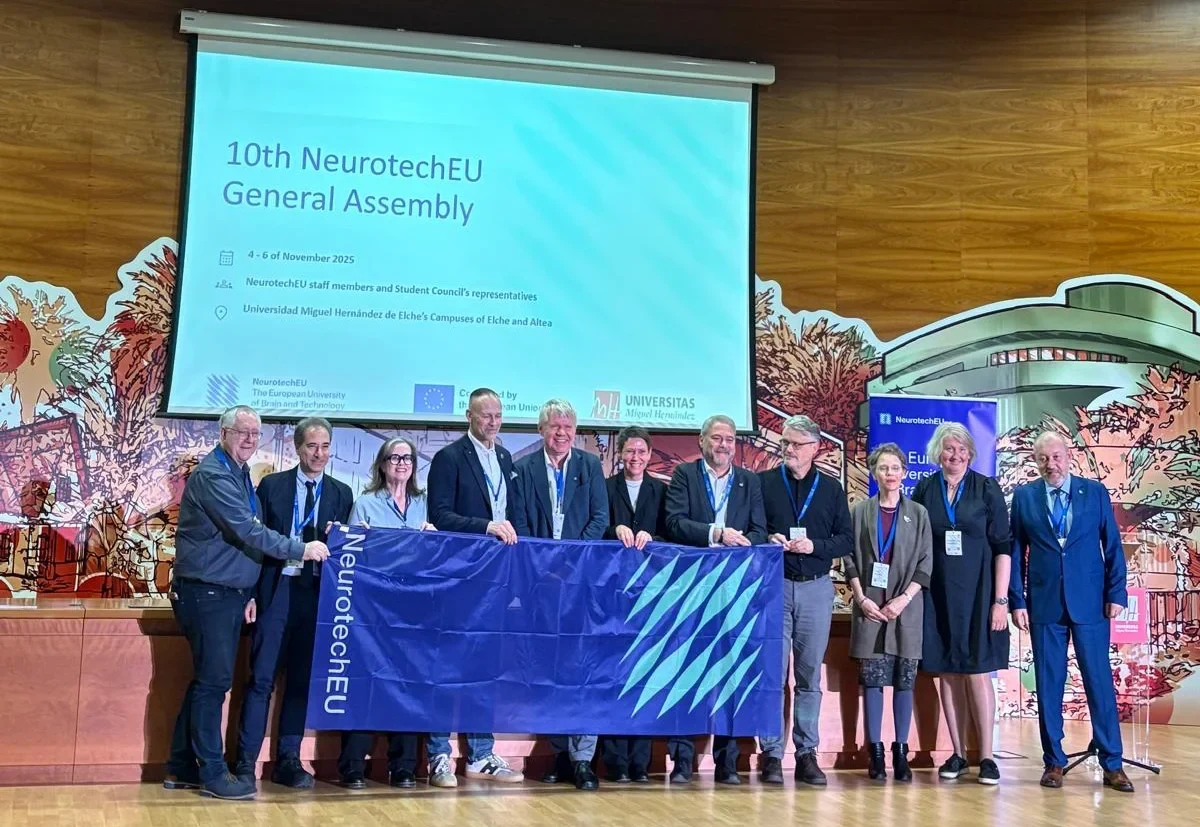
For three days, Rector Professor Michael Hoch, Professor Ilona Grunwald Kadow, Vice Rector for Research and Career Development and Dr. Katharina Fuchs-Bodde, Director of the International Office, met with representatives of the partner universities at the tenth General Assembly held in Spain to set a course for the future of NeurotechEU in workshops and strategy sessions. The alliance represents a network of nine leading European universities dedicated to educating and training the next generation of leading scientists and health care professionals, with the larger aim of affording greater quality of life throughout Europe.
Preparation of the Midterm Report was a major focus of the conference, which has to be submitted to the European Commission by the end of this year. The report is a look back from the halfway point of the second funding phase of NeurotechEU (2023–2027), representing a milestone for the alliance. As members of the NeurotechEU Board of Governors and Board of Rectors, the University of Bonn’s Rector Hoch, Vice Rector Grunwald Kadow and Director Fuchs-Bodde also worked intensively at the conference on defining strategic priorities for the years ahead. Preparations for the renewal application to be filed with the European Commission next year are already a top priority, which, if approved, would move the alliance into its third phase.
Innsbruck joins as high-contributing partner
Of particular significance at the General Assembly was the formal admission of the Medical University of Innsbruck as the alliance’s latest member. NeurotechEU thus now consists of nine leading European universities collaborating at the nexus point of neuroscience, technology, medicine and artificial intelligence to develop groundbreaking solutions. “The Medical University of Innsbruck joining the alliance is a huge gain for NeurotechEU. The institution has valuable competencies and knowledge to contribute and brings us closer to our common goal of making Europe a leading location for teaching, research and innovation in the field of neurotechnology,” said Vice Rector Grunwald Kadow.
Additionally, Western University (of Canada) joined as an associate partner university. The conference was also attended by representatives of the University of Debrecen in Hungary, another associate partner. The new ties with these universities serve to expand the international network and will open up new collaboration opportunities in research and teaching while capturing substantial added scientific expertise.
Commitment on all levels
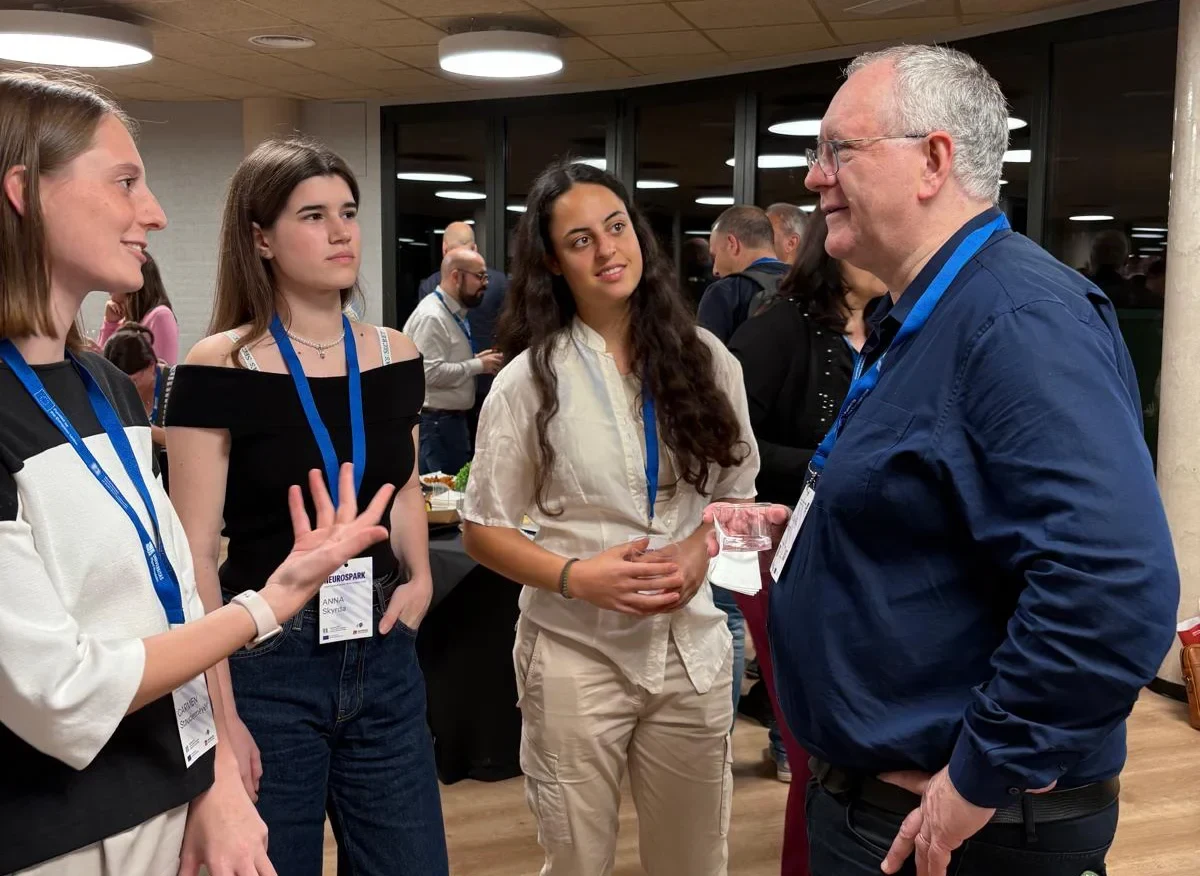
In parallel to the committee work going on at the conference held in Elche, Spain, students from all Neurotech partner universities participated in the Neurospark hackathon. Three students from the University of Bonn Department of Psychology attended the competition as part of efforts to develop creative approaches to current neurotechnology challenges in collaboration with European colleagues. The title of the winning team’s project was “Brain Unrotting.”
The conference program offered many opportunities for interacting with other attendees after the intensive meeting work, including a group dinner and a guided tour of the historic old town of Altea. The representatives of host institution Miguel Hernández University of Elche were much praised for offering such warm hospitality and organizing the event with such professionalism.
A look ahead
The heads of the various work packages presented their results and the next steps to be taken in a concluding plenary session. In his closing remarks, Alliance Coordinator Professor Richard van Wezel of Radboud University (Netherlands) spoke of the tremendous team spirit he felt between the various partner universities.
The University of Bonn, meanwhile, looks at the future of the alliance with optimism. With excellence in teaching and research, international networks and the commitment of its students and associate partners it will continue shaping European higher education in the field of neurotechnology and opening up new perspectives.