What are core facilities – and why are they so valuable?
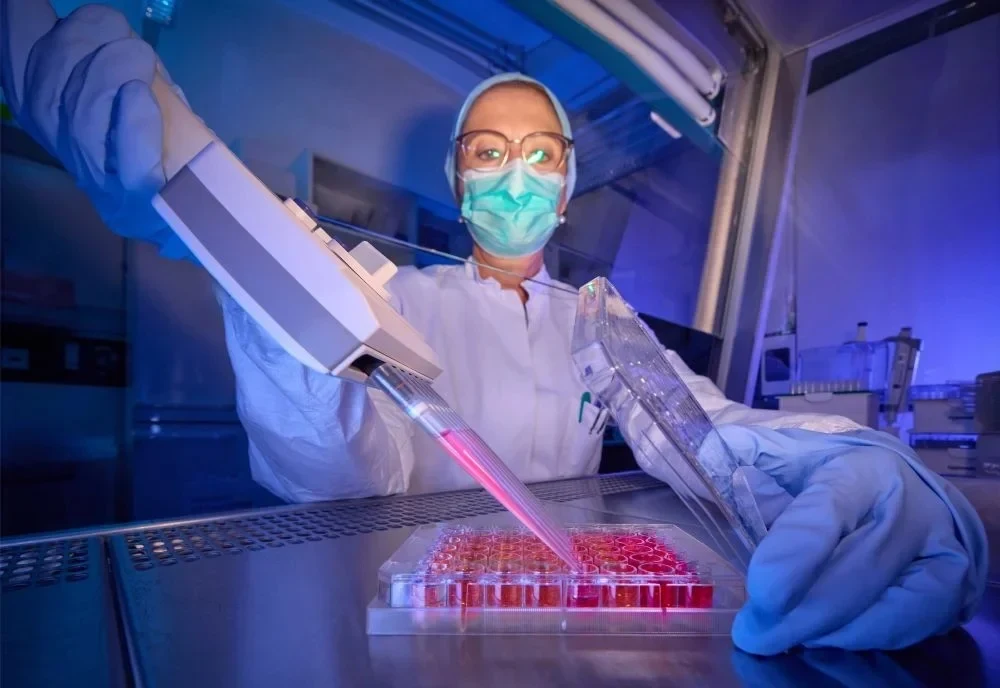
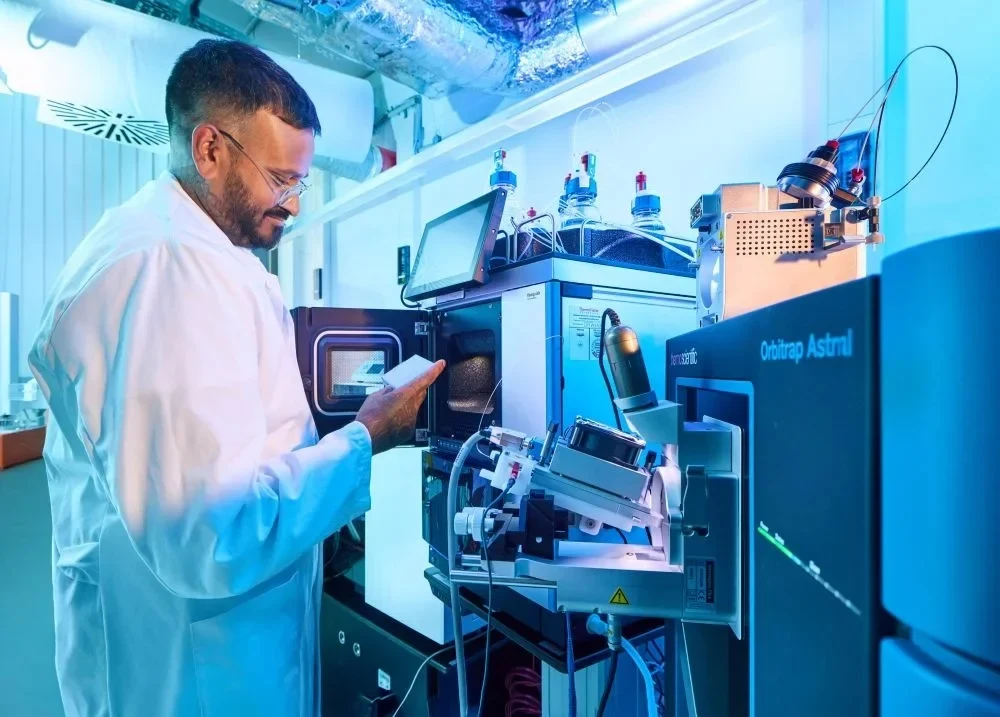
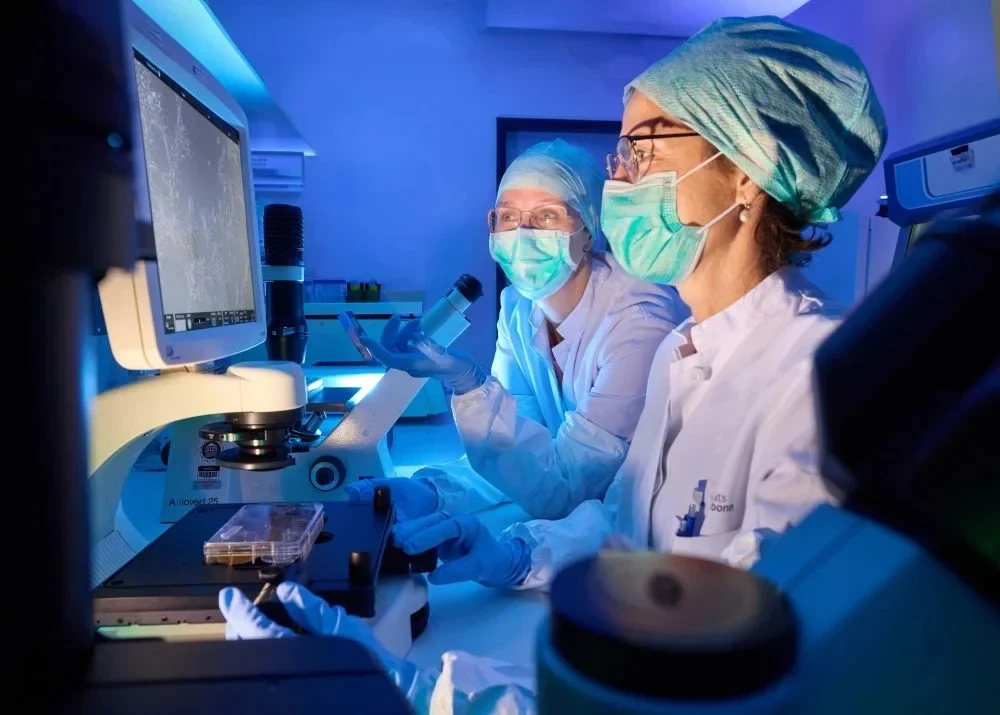
“Core facilities” are service and technology platforms within a university. They pool particularly sophisticated, expensive, or specialized equipment and procedures that are essential for many research projects – for example, high-performance microscopes, modern instruments for automated experiments, or specialized rooms for plant research.
The advantage: researchers do not have to purchase this equipment themselves or wait until usage slots become available at oversubscribed shared facilities elsewhere. At the same time, a team of experts is on hand to maintain the instruments, provide training, and support the planning of experiments. This allows scientists – regardless of their discipline or the equipment available in their own labs – to access state-of-the-art technology and put their ideas into practice faster and at the highest level.
High-tech for cell analysis and cell sorting
An outstanding example is the Core Facility “Flow Cytometry.” A flow cytometer is a device used to examine cells individually “on the fly,” by passing them in a liquid stream through a very thin measuring beam (usually laser light). Each cell scatters the light in its own way or emits fluorescence if it has been previously marked with special dyes. In this way, the device can measure the size, shape, and certain properties of each individual cell – and do so for thousands of cells in quick succession. The system enables precise single-cell analyses, spectral measurements, and imaging. One can imagine it as a high-tech assembly line inspection for cells: each cell is scanned, classified, and – if necessary – even automatically sorted at lightning speed. The highly purified cell material obtained in this way can then be further processed, for example to better understand disease patterns caused by cells with special characteristics. Researchers in the life sciences thus benefit from an infrastructure that meets the highest international standards.
Harnessing nanobodies for high-precision research
The “Nanobodies” core facility is likewise unique in its own way. It produces bespoke, highly specific antibodies that can be put to a wide variety of uses in research and development, from basic research through to diagnostics. The stability and versatility of these molecules make them a powerful tool in modern biomedicine. The team helps researchers not only to manufacture these versatile “little helpers” but also to tweak the functions that they are to perform.
Climate chambers for plant research
The “Climate Chambers” core facility provides the best possible conditions for the agricultural and environmental sciences. Twelve state-of-the-art climate chambers are on hand to enable temperature, light, humidity and other environmental parameters to be adjusted precisely, where necessary in compliance with high safety standards as well. This allows plant experiments to be conducted under strictly controlled and reproducible conditions, something that is essential for producing sound research findings.
More than just equipment—a whole network for innovation
All the University of Bonn’s core facilities boast a high degree of service focus, with teams of experts providing advice on planning experiments, supporting their execution and offering training. Researchers engage in academic dialogue about the best methodology for obtaining new insights, while a central booking system gives them a straightforward way to access all the services.
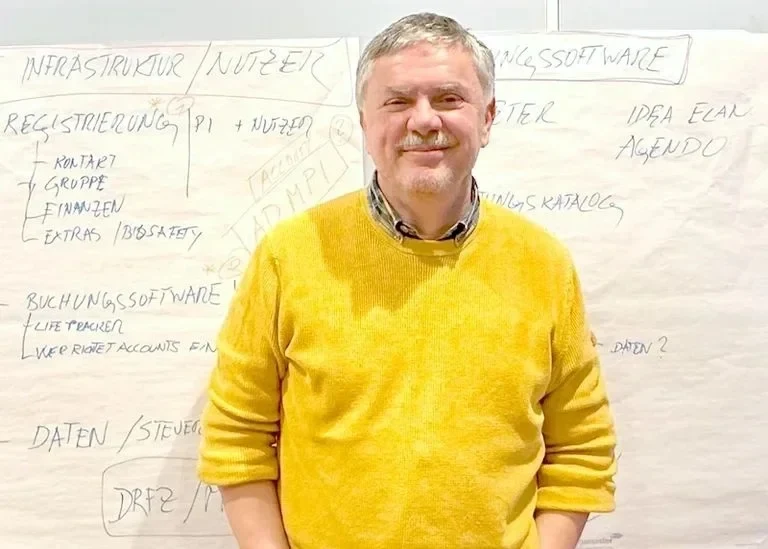
By pooling expertise in the new central office for the core facilities led by Dr. Elmar Endl, the University of Bonn is making it crystal-clear that excellence in research needs first-class conditions in which to flourish, something that the University guarantees for its researchers.
Find out more here:
https://www.btc.uni-bonn.de/en/core-facilities
Three questions for Elmar Endl, head of Core Facilities:
How many users do you have within the University? And are some of them “power users,” who make particularly heavy use of your facilities?
Dr. Endl: There are currently over 650 registered researchers across the 14 core facilities. Some of them will book hundreds of hours on one type of equipment, while others will use a wide range of instruments and methods in different core facilities. There are also some departments and institutes where nearly every member of staff is signed up to use core facilities, or working groups that have secured tens of thousands of euros in third-party funding to use core facilities. This makes it hard to say what exactly constitutes a “power user.” Traditionally, of course, life scientists make extensive use of the core facilities, so you could call the members of the Life and Health Transdisciplinary Research Area “power users.” But you also have more and more researchers from other key areas of research taking advantage of what the core facilities offer. So you could have an archaeologist who’s a “power user” in the Faculty of Arts.
What impact are the core facilities having on the University of Bonn’s competitiveness in terms of research on the international stage?
Dr. Endl: Many places around the world have already seen a cultural shift in how research infrastructure is operated. Here you have resources like major research instrumentation no longer being reserved exclusively for professorships but instead made available to all researchers in well-equipped, professionally run units. And professors benefit from these new structures too, because they can draw on seasoned staff and a well-kept pool of equipment and don’t need to worry about tasks like induction, administration and maintenance. Ideally, the experience that the core facility staff have built up will then be able to make a key contribution to achieving whatever research objective is being worked toward. However, tight budgets are also making it increasingly important from a financial perspective to use available resources as efficiently as possible and plan new investments strategically in order to remain competitive in the international arena. The key performance indicators you get from the core facilities then serve as an aid to decision-making in the faculties or as the basis for discussions in the new “Technology and Innovation Committee” at Rectorate level.
My job as head of the new “Core Facilities and Technology Platforms Office” is to find out how other countries such as the US and the UK managed to be running core facilities highly professionally some years ago while also remaining an attractive and conducive environment for research, i.e. without any extra red tape. Digitalization, overarching coordination of administrative procedures and helpful, well-trained academic staff will have a big hand in this.
Can you give a recent example of how access to a core facility enabled a research project to make major progress?
Dr. Endl: In 2024, we had over 110 publications in which the authors had expressed gratitude for the help they received from the core facilities. These “funding acknowledgements” are now required by the German Research Foundation, or DFG. So it’s hard to say which contribution was more decisive, because none of these publications could have come about without the relevant core facility. The Bonn Technology Campus web page offers a snapshot of the projects that were worked on. What it shows is that, when it comes to handling complex projects successfully, it’s no longer really access to a single core facility that counts but having several of them working in concert. For example, I’ll find myself looking at some tissue under the microscope and identifying an interesting type of cell that’s associated with a certain medical condition. I’ll then use flow cytometry and cell sorting to clean these cells and next-generation sequencing and mass spectrometry to isolate their physiological properties. All these techniques we can offer in our core facilities.
Speaking personally, I’m always happy when we can help a young researcher to get the first major publication of their career off the ground by giving them access to the latest cutting-edge technology and one-to-one support. And I’m even more delighted when, years later, these people come back from abroad, take up a professorship in Bonn and are reunited with their whole working group in the core facilities, meaning they’ll have come full circle.