05. July 2022

Molecule boosts fat burning Molecule boosts fat burning

Study identifies a new signaling molecule that increases the energy consumption of brown fat cells

A study led by the University of Bonn and the University Hospital Bonn has identified a molecule - the purine inosine - that boosts fat burning in brown adipocytes. The mechanism was discovered in mice, but probably exists in humans as well: If a transporter for inosine is less active, the mice remain significantly leaner despite a high-fat diet. The study, which also involved researchers from the University of Leipzig and the University Medical Center Hamburg-Eppendorf, has now been published in the journal Nature.

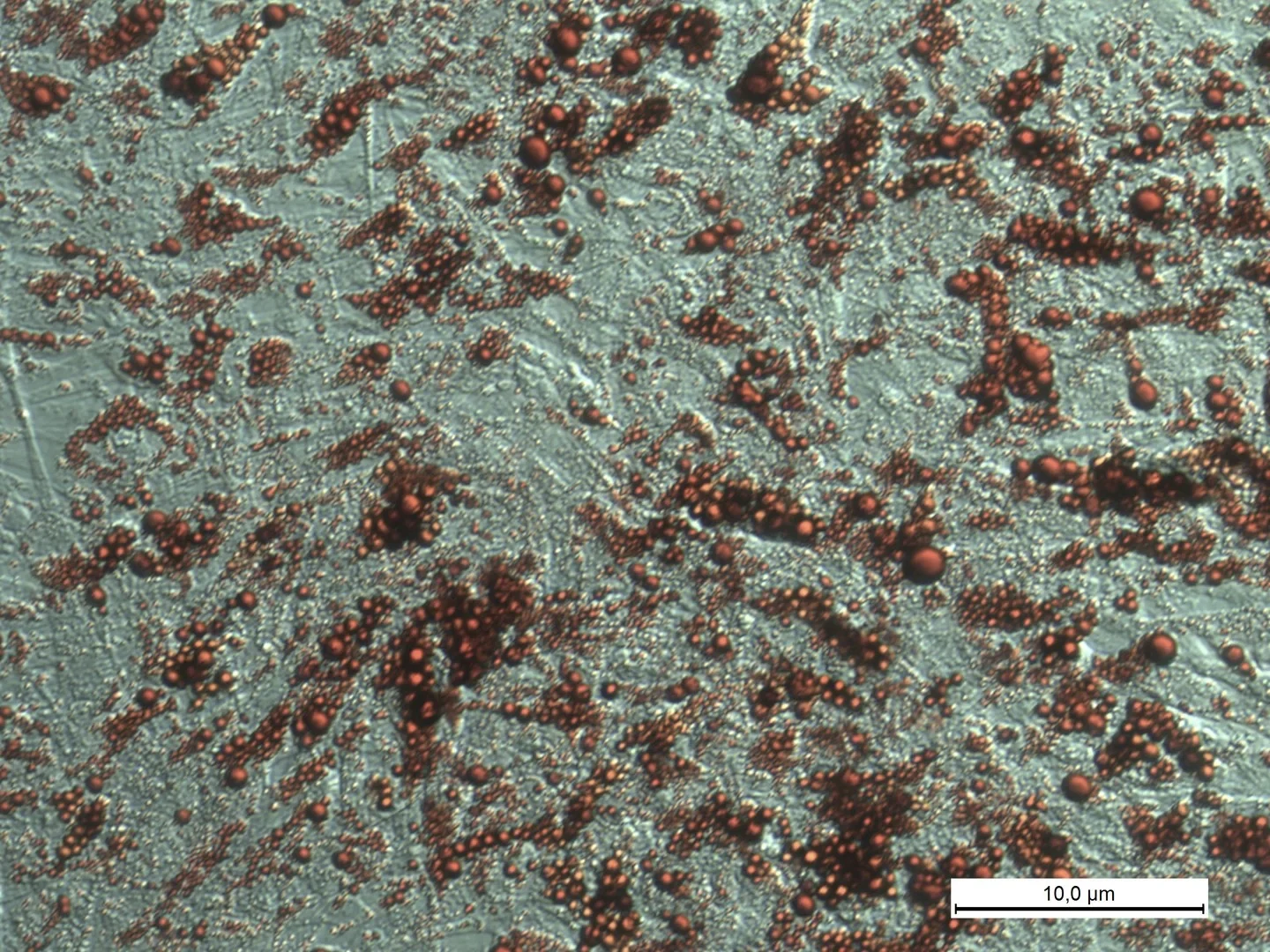
Human brown adipocytes, lipid stained red (RedO oil stain)
Human brown adipocytes, lipid stained red (RedO oil stain) © Thorsten Gnad / University of Bonn
Download all images in original size The impression in connection with the service is free, while the image specified author is mentioned.
Please fill out this field using the example format provided in the placeholder.
The phone number will be handled in accordance with GDPR.

Normally, fat cells store energy. In brown fat cells, however, energy is dissipated as heat - brown fat thus serves as a biological heater. Most mammals therefore have this mechanism. In humans it keeps newborns warm, in human adults, brown fat activation positively correlates with cardio-metabolic health.

"Nowadays, however, we're toasty warm even in winter," explains Prof. Dr. Alexander Pfeifer from the Institute of Pharmacology and Toxicology at the University Hospital Bonn. "So our body's own furnaces are hardly needed anymore." At the same time, we are eating an increasingly energy-dense diet and are also moving far less than our ancestors. These three factors are poison for brown fat cells: They gradually cease to function and eventually even die. On the other hand, the number of severely overweight people worldwide continues to increase. "Research groups around the world are therefore looking for substances that stimulate brown fat and thus increase fat burning," says Pfeifer.

Dying fat cells boost energy combustion of their neighbors

Together with a group of colleagues, the team at the University of Bonn has now identified a key molecule named inosine that is capable of burning fat. "It is known that dying cells release a mix of messenger molecules that influence the function of their neighbors," explains Dr. Birte Niemann from Pfeifer's research group. Together with her colleague Dr. Saskia Haufs-Brusberg, she planned and conducted the central experiments of the study. "We wanted to know if this mechanism also exists in brown fat." [...]

The authors acknowledge the support from the Next Generation Sequencing and Bioinformatics Core Facility.

The University of Bonn as well as the University Hospital Bonn, the University Medical Center Hamburg-Eppendorf, the University as well as the University Hospital Leipzig, the Helmholtz Center Munich and the University of Texas were involved in the study. The work was funded by the German Research Foundation and the National Institute of Health (USA).

Publication: Birte Niemann et al.: Apoptotic brown adipocytes enhance energy expenditure via extracellular inosine; Nature; https://doi.org/10.1038/s41586-022-05041-0

Prof. Dr. Alexander Pfeifer
Institute of Pharmacology and Toxicology
University of Bonn
Phone: +49 228 28751300
Email: alexander.pfeifer@uni-bonn.de

Wird geladen