Quantum physics on a large scale
A single atom represents a relatively simple system, yet it cannot be described by classical mechanics. This is because different laws prevail on this minute scale; particles have different properties than on the macro-scale, which is why quantum mechanics is required. Basing upon decades of research, today it is routine procedure for quantum physicists to isolate, study and manipulate individual quantum systems, such as optically captured single atoms.
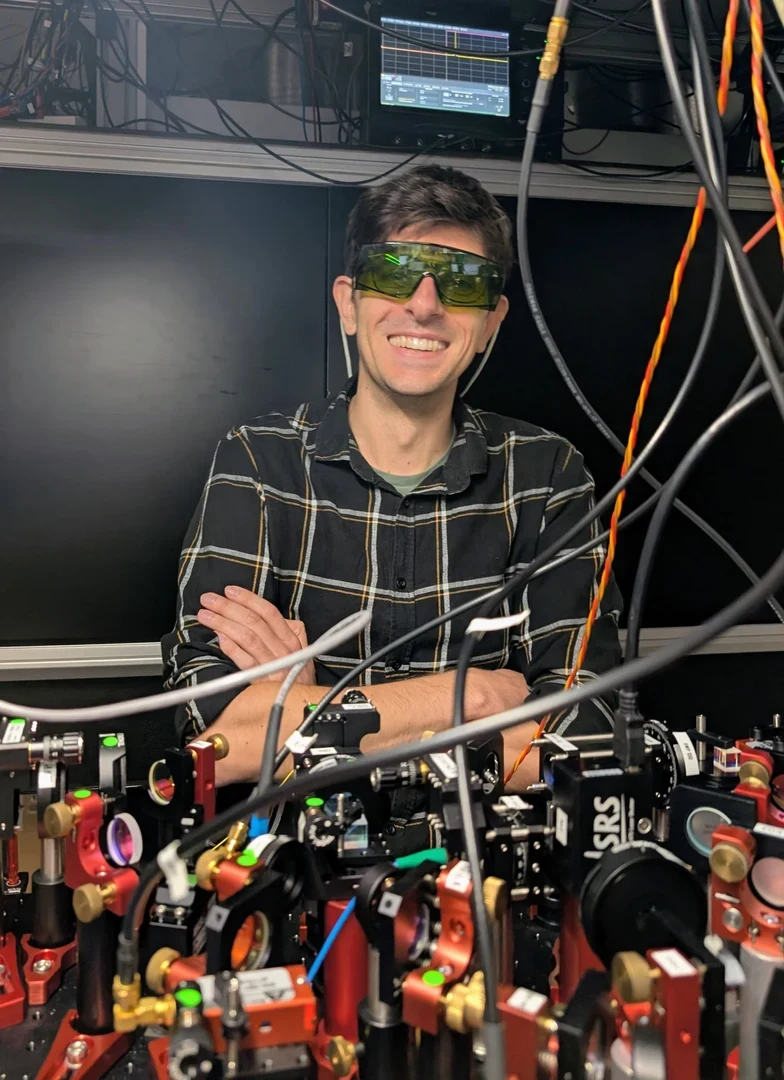
In his project titled “Atom-by-atom assembly of QUantum MattEr in waveguide and cavity QED”(AQUME), Dr. Riccardo Pennetta is investigating how this process could be made possible on a larger scale. “The experiments conducted in this project are aimed at realizing something not observable in the natural world: large systems whose properties are dominated by quantum mechanics,” Dr. Pennetta explains, “and we are looking to discover what the properties of such systems are.” To this end, Pennetta and his team are developing experimental tools to individually control thousands of atoms simultaneously and then create strong interactions between them via photons that propagate in nanophotonic waveguides. “Our goal is to be able to control every single atom.” This research work is currently classified as a basic research project, but the findings could eventually lead to quantum communication applications, such as a “quantum internet” in which users exchange data via principles of quantum mechanics.
“Landing an ERC Starting Grant is the dream of every early-career researcher. It will allow me, among other things, to build an experimental setup that will likely remain at the heart of my career long after the funding period has ended,” says Pennetta.
Riccardo Pennetta completed his master degree in Physics at the University of Bari in Italy before earning his doctorate in 2019 at the Max Planck Institute for the Science of Light and the Friedrich-Alexander-Universität Erlangen-Nürnberg. Thereafter he was a postdoc researcher at Humboldt-Universität zu Berlin. In summer 2024 he was Visiting Postdoctoral Research Associate at Princeton University in the US. In July 2026 he started working at the University of Bonn Institute of Physics.
Nerve cells for spatial cognition
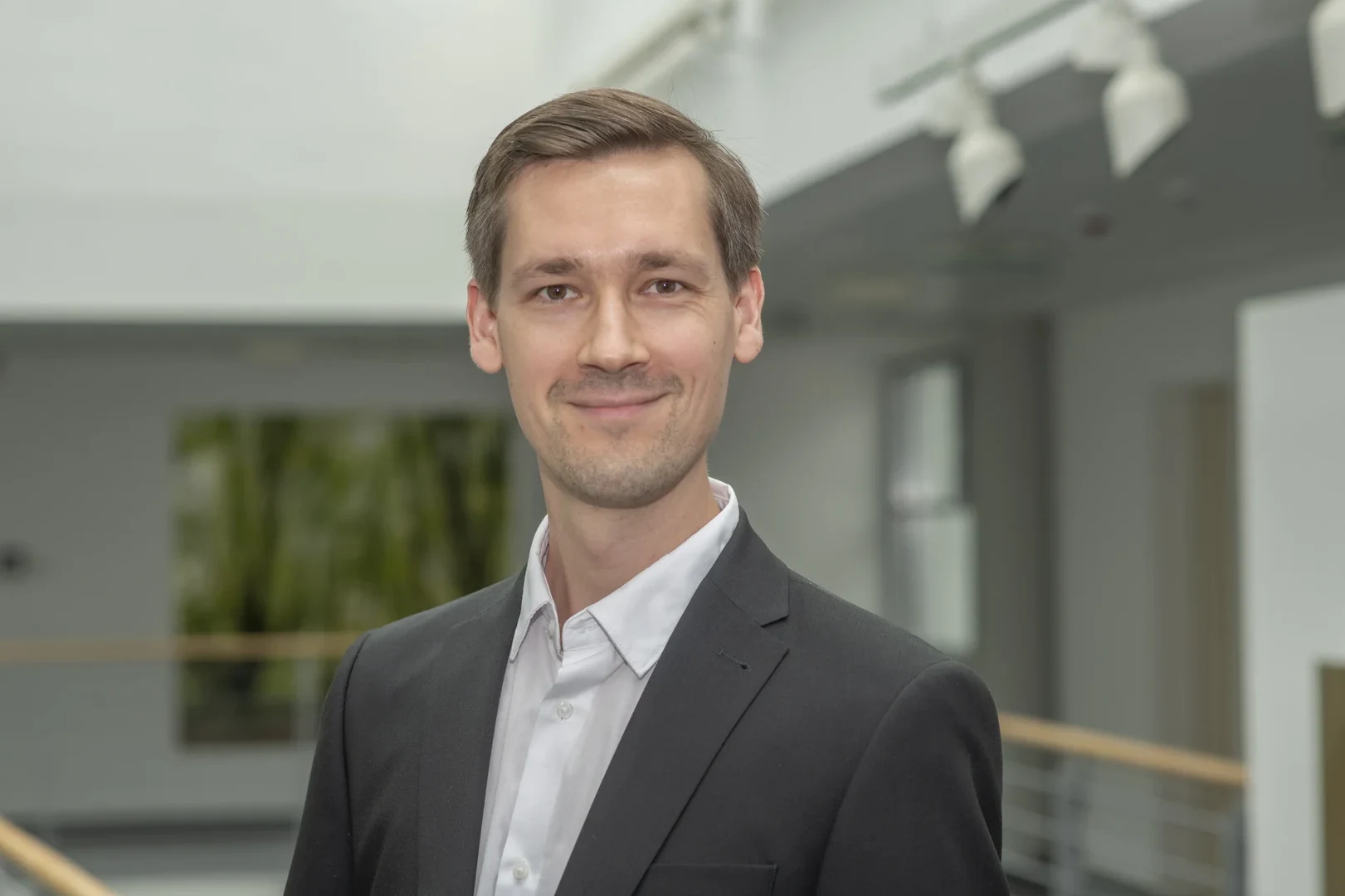
How does nerve cell activity support complex mental functions? This is the question investigated by Professor Lukas Kunz from the Department of Epileptology at University Hospital Bonn. In his ERC-funded project titled “Making sense of space: Uncovering the roles of egocentric neurons for spatial behavior in humans (NEUROSPACE),” Professor Kunz aims to explore how the brain represents the world from the first-person perspective. “We believe that special nerve cells in the brain, known as egocentric neurons, play a key role in this process,” Kunz explains. “Our hypothesis is that these cells represent the position of other people, objects, landmarks and goals relative to our own body. In this way, they may create an internal map of our surroundings centered on ourselves.”
To test this hypothesis, Kunz and his team will measure the activity of individual nerve cells in epilepsy patients who already have electrodes implanted in their brains for medical reasons. The study participants will perform various tasks, both in the real world and in virtual environments, allowing the researchers to investigate the role of egocentric neurons in perception, orientation, navigation, memory, and even the understanding of spatial language. “The findings could help us better understand disorders of spatial orientation and memory that occur in epilepsy, Alzheimer’s and other diseases, potentially providing a basis for new diagnostic and therapeutic approaches,” says Kunz, who is a member of the Transdisciplinary Research Area (TRA) “Life and Health” at the University of Bonn.
Lukas Kunz has been Professor of Cognitive and Translational Neuroscience at the University of Bonn since 2023 and leads a research group at the Department of Epileptology at University Hospital Bonn (UKB). He studied medicine, philosophy and German studies at the University of Bonn and received doctorates in medicine and biology at the Universities of Bonn and Freiburg. From 2018 to 2023, he was a postdoctoral fellow at University Medical Center Freiburg and at Columbia University in New York.